Image Image

Before anointing oils became skincare, they were armor. The body was not cleaned and perfumed for vanity. It was prepared as a vessel. The skin is your largest altar, and what you put on it is an offering to your own temple.

Anointing is the bridge between thought and embodiment. You can write the affirmation, pull the card, and light the candle—but when you press oil to your throat, wrists, or heart, you declare that the working is not abstract. It lives in your cells.

Temple Silk was born from this truth. A body oil is not a product. It is a witness. When you anoint yourself before a prosperity ritual, a difficult conversation, or a day when you must walk like you already own the room, the oil becomes the membrane between your intention and the physical world.

The practice is older than commerce. Priests, priestesses, and sovereign women have always known that scent is memory, and memory is magic. Your anointing oil should smell like the future you are building, not the past you are trying to mask.

Simple practice: Choose an anointing oil that matches your current pillar focus. Apply it to your pulse points while the skin is still warm from bathing. Speak your intention aloud. Do not rush to dress. Let the oil teach your body what the mind already claimed.

Image Image

Vinegar is not polite. It stings, it clears, and it preserves what is worth keeping by destroying what is not. In the old work, vinegar is the ally of endings, boundaries, and spiritual sanitation. It does not ask permission. It acts.
Most people keep vinegar in the kitchen and forget it is also a weapon. In hoodoo and folk practice, it breaks hexes, turns back enemies, sours toxic situations, and cleanses spaces that feel heavy with residue—emotional, spiritual, or ancestral. It is the spiritual equivalent of pouring bleach on a mold that keeps returning. Vinegar does not negotiate with what should not be there.

The Dual Nature
Vinegar preserves and it destroys. Apple cider vinegar with the mother still alive is a keeper of lineage—fermented, ongoing, ancestral. White distilled vinegar is the blank slate, the cutting edge, the thing you use when you need a door sealed and a cord severed. Both are valid. Both are allies. The question is always: are you trying to maintain something living, or are you trying to end something that refuses to die?

The Kitchen as Altar
The same vinegar that seals a jar of crossed work also brightens a pot of greens. This is not a contradiction. The kitchen is an altar, and cooking is a form of spellwork that your body participates in directly.
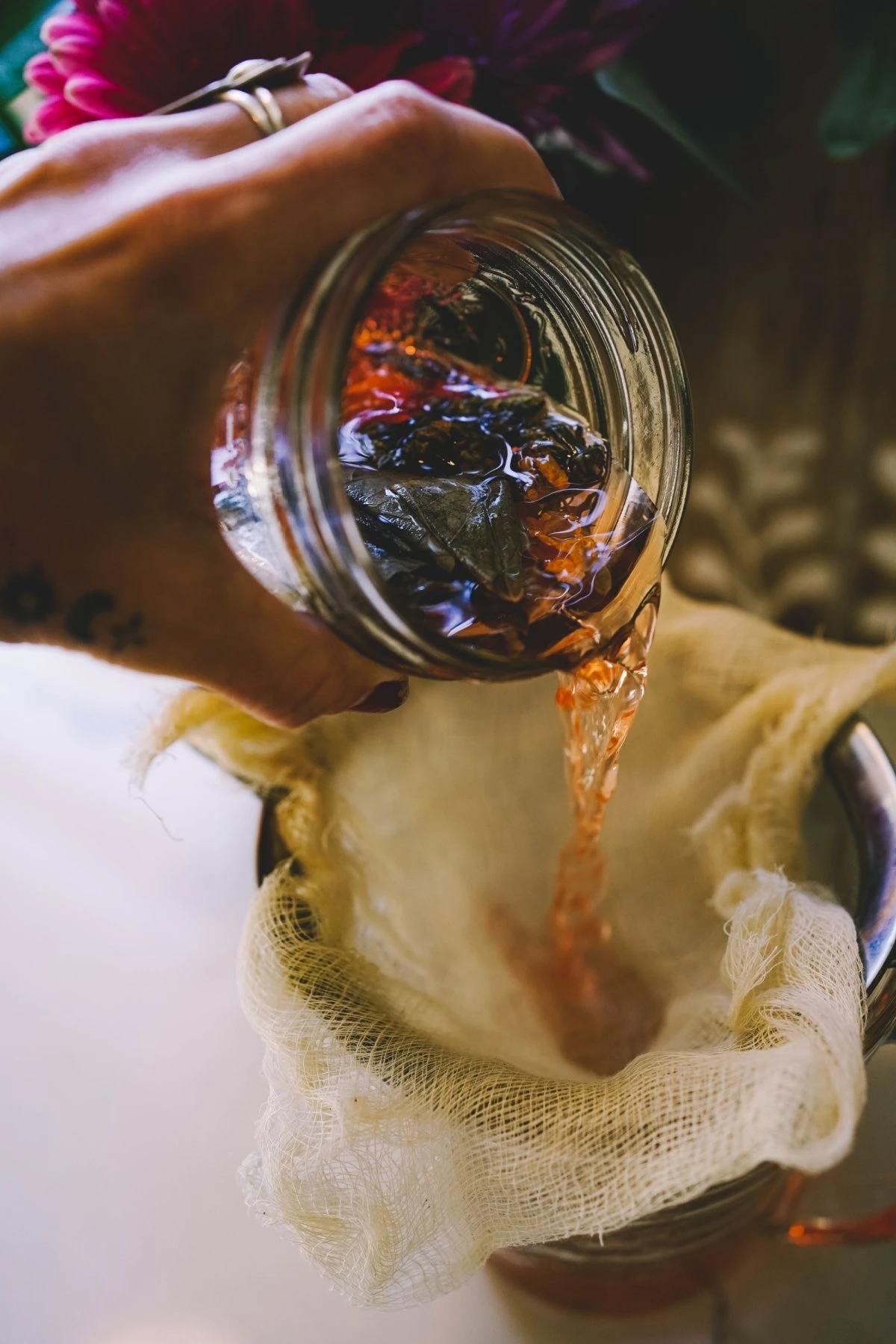
Use apple cider vinegar to finish a slow braise of collards or mustard greens. The acid breaks down toughness and draws out minerals from the pot liquor. Add a splash to beans to reduce gas and clarify digestion. Pickle vegetables in vinegar, salt, and your intention: what you preserve in the jar is what you commit to keeping in your life. The fermentation itself is a living process, a small universe in glass that mirrors the prosperity you are building.
When you cook with vinegar, you are not separate from the mystic. You are practicing the same principle—cutting through heaviness, preserving what is vital, making the bitter palatable. The body that eats the working is the same body that walks into the temple.

Working With the Ally
To cleanse a space: Add vinegar to your floor wash, especially in the corners and behind doors where stagnant energy collects. Speak your intention while the water moves. The vinegar lifts what soap cannot touch.

To protect an entry: Place a small bowl of vinegar near your front door with a pinch of salt. Replace it weekly. It absorbs what is sent toward your threshold before it crosses the boundary.

To clear your own field: Add a cup of apple cider vinegar to a bath when you feel sticky, watched, or drained by contact with others. Soak for twenty minutes. Do not rinse immediately. Let the ally finish her work.

The Discipline
Vinegar is cheap and common, which makes people disrespect it. Do not make this mistake. The most accessible allies are often the most potent because they have been tested across centuries and households. Vinegar does not need your awe. It needs your clear intention and your willingness to use it without hesitation when the situation demands.

This ally teaches that preservation and destruction are the same act viewed from different angles. What you keep alive requires that you kill what would contaminate it.
Simple practice: Take a small glass of white vinegar. Hold it in both hands and name one thing you are done tolerating—a pattern, a presence, a condition. Pour the vinegar down the drain while the water runs. Do not look back at it. The ally knows what to do from here.

Image Image

Fire is the most honest element. It does not pretend to be gentle when it is not. In candle work, the flame is not just a tool—it is an ally with its own will, appetite, and laws. To work with fire safely is not to tame it. It is to build a worthy container for what it wishes to give you.
The mystics who burn altars down are not unlucky. They are undisciplined. Safety is not the opposite of devotion. It is the structure that allows devotion to last.

Build the Altar Before You Light It
Every ritual begins before the match strikes. Choose your surface as carefully as you choose your intention. Wood, cloth, and paper are not allies to open flame—use stone, metal, glass, or ceramic as your foundation. A proper holder is non-negotiable. If you anoint your candles with oil or dress them with herbs, know that those additions are fuel. They can flare, spark, and travel in ways plain wax will not. Dressed candles demand even more vigilance, not less.[recandlecompany +2]
Trim your wick to one-quarter inch before lighting. A long wick does not produce a better flame—it produces an unruly one. Clear the wax pool of debris. Wick trimmings and dust are kindling waiting for an excuse.

Space Is Part of the Spell
Give your candle breathing room. Maintain at least twelve inches of clearance from anything that can burn: curtains, books, bedding, dried herbs, and loose sleeves included. If you are burning multiple candles, space them at least three to four inches apart so they do not melt into one another or create their own drafts.

Never light a candle in a room where you might sleep. Never walk away from a flame that is still speaking. If you must leave—even for a moment—extinguish it. Fire does not negotiate with your distractions.

The Art of Extinguishing
Blowing out a candle is abrupt and disrespectful. It scatters hot wax, disturbs the working, and can leave a glowing ember you did not see. Use a candle snuffer. If you must let a spell candle burn completely down, place it inside a fireproof bowl or small cauldron with a bed of sand or salt to catch the final remains.

Do not move a candle while the wax is still liquid. Do not burn it to the very bottom of the vessel. When the wax is half an inch from the base, the working is done. Let it rest.

The Temple Standard
Keep a fire extinguisher or a large container of water within arm’s reach. Keep pets and children at a respectful distance. Work in a well-ventilated room, but away from vents and fans that can tip a flame toward disaster.

Fire safety is not a separate protocol you memorize and set aside. It is part of the ritual body. When you approach the flame with discipline, you are not dimming your magic. You are proving that you are mature enough to hold it.

The pre-ritual witness: Before you light your next candle, pause. Look at your setup. Ask aloud: Is this worthy of what I am calling in? If the answer is yes, strike the match. If the answer is no, fix it first. The flame will wait for you to be ready.

Purus fermentum purus, enim faucibus diam amet ultricies ornare enim. Eu, sed vel nunc enim, sollicitudin vitae ut. Dolor augue congue fermentum euismod donec. Leo lectus...
Join for free to access